
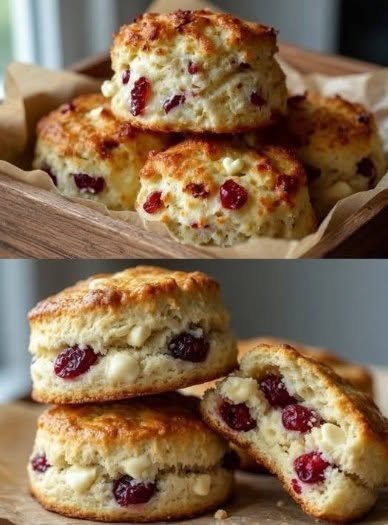
I made these cranberry orange scones this morning, and honestly, my kitchen smelled incredible. There’s just something about fresh orange zest and buttery pastry baking in the oven that makes the whole house feel cozy.
These also bring back a sweet family memory for me. My sister used to make cranberry orange scones for our holiday brunches, and they always disappeared faster than anything else on the table. We’d put on a pot of tea, pile the warm scones onto a platter, and spend way too long sitting around the kitchen talking.
I usually think of scones as a special-occasion bake, but these are actually quite simple to make. The dried cranberries add little bursts of tart sweetness, while fresh orange zest gives the scones that bright citrus flavor that makes them taste extra special.
And if you eat one warm with a little butter? Well… that’s pretty much weekend happiness.
Ingredients
For the Scones
- 2 cups (250g) all-purpose flour
- ⅓ cup (65g) granulated sugar
- 2 teaspoons baking powder
- ½ teaspoon salt
- ½ cup (115g) cold unsalted butter, cubed
- ½ cup (75g) dried cranberries
- 1 tablespoon fresh orange zest
- 1 large egg
- ½ cup (120ml) heavy cream or whole milk
- 1 teaspoon vanilla extract
For the Orange Glaze — Optional
- 1 cup (120g) powdered sugar
- 1–2 tablespoons fresh orange juice
- ½ teaspoon orange zest
How to Make Cranberry Orange Scones
1. Prepare the oven and baking sheet
Preheat your oven to 400°F (200°C).
Line a baking sheet with parchment paper.
I like to do this first because once the dough comes together, you don’t want to spend time looking for parchment while the butter is warming up.
2. Mix the dry ingredients
In a large bowl, whisk together the flour, sugar, baking powder, and salt.
Add the orange zest and dried cranberries and give everything a quick stir.
The orange zest is where so much of the flavor comes from, so don’t be shy with it. Freshly grated zest makes a noticeable difference.
3. Cut in the cold butter
Add the cold cubed butter to the flour mixture.
Using a pastry cutter, fork, or your fingertips, work the butter into the flour until you have a crumbly mixture with some pea-sized pieces of butter still visible.
Don’t try to make it completely smooth. Those little pieces of cold butter are what help create flaky, tender layers.
4. Add the wet ingredients
In a separate small bowl, whisk together the egg, heavy cream, and vanilla extract.
Pour the mixture into the dry ingredients.
Using a wooden spoon or spatula, gently stir until the dough just comes together.
It may look slightly shaggy. That’s completely fine.
5. Shape the dough
Turn the dough onto a lightly floured surface.
Gently bring it together with your hands, being careful not to overwork it.
Pat the dough into a circle about 1-inch thick.
Cut it into 8 wedges, just like you’re cutting a pizza.
Alternatively, you can use a round biscuit cutter if you prefer traditional round scones.
6. Chill the scones
Place the scones on the prepared baking sheet, leaving a little space between them.
For especially flaky scones, I usually pop the tray into the refrigerator for 15–20 minutes before baking.
This gives the butter a chance to firm up again, which helps the scones hold their shape in the oven.
7. Bake until golden
Bake for approximately 18–22 minutes, or until the tops are lightly golden and the edges are cooked through.
Your kitchen should smell amazing at this point. That’s when everyone suddenly starts wandering into the kitchen asking, “Are they ready yet?”
Let the scones cool for about 5–10 minutes before serving.
8. Add the orange glaze
If you’re making the glaze, whisk together the powdered sugar, orange juice, and orange zest until smooth.
Drizzle it over the slightly cooled scones.
I like a fairly thin drizzle so you can still see the golden tops, but you can make the glaze thicker if you want a sweeter finish.
Tips for Perfect Cranberry Orange Scones
Keep the butter cold
This is probably the most important scone tip. Cold butter = flaky scones.
If your kitchen is warm or your hands tend to warm the dough quickly, don’t hesitate to chill the shaped scones before baking.
Don’t overmix the dough
Once the wet ingredients are added, mix just until everything comes together. Overworking the dough can make your scones tough instead of tender.
Use fresh orange zest
Fresh orange zest gives these scones a much brighter flavor than bottled orange flavoring. I usually zest the orange directly over the bowl so none of those fragrant oils go to waste.
Don’t add too much flour
The dough should be soft and slightly shaggy. If it feels a little sticky, that’s okay. Adding lots of extra flour can make the finished scones dry.
Soak very dry cranberries
If your dried cranberries are particularly hard or dry, soak them in a little warm orange juice for about 10 minutes. Drain and pat them dry before adding them to the dough.
Want extra-tall scones?
Don’t flatten the dough too much. A thickness of around 1 to 1½ inches will give you nice, substantial scones.
Serving Suggestions
These cranberry orange scones are practically made for a cozy breakfast or afternoon tea.
I love serving them with:
- Hot black tea
- Earl Grey tea
- Coffee or a latte
- Fresh orange slices
- Salted butter
- Orange marmalade
- Strawberry or raspberry jam
- Clotted cream
- A little honey
For a holiday brunch, put the scones on a large serving platter alongside fresh fruit, yogurt, scrambled eggs, and a big pot of coffee or tea.
And if you’re making them for Christmas morning, I highly recommend preparing the dough the night before and baking them fresh in the morning. Waking up to the smell of orange and buttery scones is pretty hard to beat.
How to Store Cranberry Orange Scones
Store leftover scones in an airtight container at room temperature for 1–2 days.
For longer storage, freeze them in a freezer-safe container or bag for up to 2–3 months.
You can warm them in a 300°F (150°C) oven for several minutes to bring back some of that freshly baked texture.
If you’re planning ahead, you can also freeze the unbaked shaped scones. Bake them from frozen, adding a few extra minutes to the baking time.
Approximate Nutrition Information
Per scone, based on 8 scones and without the optional glaze.
- Calories: 315
- Protein: 5g
- Carbohydrates: 42g
- Fat: 14g
- Saturated Fat: 8g
- Fiber: 2g
- Sugar: 14g
- Sodium: 250mg
Nutrition will vary depending on the specific ingredients and portion size.
Frequently Asked Questions
1. Can I use fresh cranberries instead of dried cranberries?
Yes, although the texture and flavor will be different. Fresh cranberries are much more tart and contain more moisture. If using them, roughly chop them first and consider adding a little extra sugar to balance their tartness.
2. Can I make cranberry orange scones ahead of time?
Absolutely. You can prepare and shape the scones, cover them well, and refrigerate them overnight. Bake them fresh the next morning. This is one of my favorite tricks for holiday brunches.
3. Why are my scones not flaky?
The most common reasons are warm butter, overmixing, or adding too much flour. Keep the butter cold, handle the dough gently, and don’t knead it like bread dough.
4. Can I make these scones without the glaze?
Definitely. The scones are already flavorful from the cranberries and orange zest. Honestly, sometimes I skip the glaze and just serve them warm with butter or orange marmalade.
5. Can I substitute milk for heavy cream?
Yes. Whole milk will work nicely, although heavy cream produces a richer, more tender scone. If you’re using a lower-fat milk, you may need slightly less or more depending on how your dough comes together.
Final Thoughts
These cranberry orange scones are one of those recipes that make an ordinary morning feel a little more special. They’re buttery and tender, with sweet-tart cranberries and plenty of bright orange flavor.
And for me, they have that extra bit of nostalgia because they remind me of my sister’s holiday brunches. I usually make a batch when I want that same cozy feeling—something warm from the oven, a mug of tea in my hands, and absolutely no reason to rush.